Welcome to CLPHA's Press Room
CLPHA experts welcome interview requests from print, radio, television, and online reporters and are happy to provide their insights on issues of public housing and related legislation and policy.
For media inquiries, please contact:
David Greer
Director of Communications
(202) 550-1381 or [email protected].
*Please let us know if you are working on deadline.
To view all of CLPHA's press releases, click here.
To view all of CLPHA's press statements, click here.
You can subscribe here to our biweekly newsletter, events invite list, and topic specific newsletters. You can also follow us on Twitter at @CLPHA. Or, send us an email with your interests and we would be happy to add you to our press lists.
Thanks again for your interest in CLPHA!
Community Collaborative Programs Work to Improve Health Outcomes for CLPHA Housing Authority Members in Durham, Louisville and Norfolk, among Others
|
(Washington, D.C.) May 8, 2026 – Housing Is, a non-profit organization dedicated to bridging gaps among the housing, health and education sectors to improve life outcomes for low-income individuals and families, and UnitedHealthcare announced today an expansion of their national collaboration to improve the health and wellbeing of people living in public housing. The expansion includes launching three additional Community Collaborative programs at Council of Large Public Housing Authorities (CLPHA) member housing authorities: Norfolk Redevelopment and Housing Authority (Norfolk, VA), Durham Housing Authority (Durham, NC) and Louisville Metro Housing Authority (Louisville, KY). The new locations were announced at the 2026 Housing Is Summit, the preeminent event dedicated to collaboration among the housing, education and health sectors, in Washington, D.C. Together, the organizations support public housing authorities in establishing Community Collaborative programs at the local level while providing national infrastructure to support community and systems-level advancement. The Community Collaborative programs bring together cross-sector organizations to co-develop, evaluate and sustain interventions to address community health needs. CLPHA, which founded Housing Is and operates the organization under a management agreement, and Housing Is have worked with UnitedHealthcare to foster relationships with public housing authorities (PHAs), federally qualified health centers and community-based organizations to improve the health and well-being of PHA residents and their surrounding communities. Since the collaboration between Housing Is, CLPHA, and UnitedHealthcare was established in 2020, ten PHA members of CLPHA have participated in the program, including Akron Metropolitan Housing Authority, Atlanta Housing, Housing Authority of the City of Austin, Columbus Metropolitan Housing Authority, Detroit Housing Commission, Houston Housing Authority, King County Housing Authority, Memphis Housing Authority, Housing Authority of New Orleans and Seattle Housing Authority. The Community Collaborative programs in these locations have addressed a wide range of health and social needs from chronic disease and food insecurity to mental health and digital literacy. “Helping low-income residents improve their health outcomes is central to the missions of CLPHA’s housing authority members, and the collaborative programming greatly supports our members’ efforts to address the most pressing health needs in their neighborhoods,” said La Shelle Dozier, CEO of CLPHA. “UnitedHealthcare has long been a critical partner to CLPHA and Housing Is, and the addition of three new sites in Durham, Louisville and Norfolk builds on many successful years of collaboration. We are honored to continue our groundbreaking work with UnitedHealthcare.” This work reflects UnitedHealthcare’s broader commitment to investing in communities to help the healthcare system work better for individuals nationwide. Through its Community Collaborative program, UnitedHealthcare has established more than 40 local programs across 26 states. “By working jointly with Housing Is, we’ve opened new channels for honest, meaningful dialogue to truly understand and address the unique needs of the communities we serve,” said Mike Cotton, CEO of UnitedHealthcare Community & State. “When UnitedHealthcare comes together with community members, government agencies, providers and nonprofits, we’re all better able to deliver the right resources and interventions to those who need them most. These types of collaborations are how we make the health system work better for everyone.” "Housing Is has long known that data and resident input are crucial to creating, sustaining and scaling successful health interventions, and our longstanding collaboration with UnitedHealthcare helps PHAs to implement health programming in their communities that is driven by this information,” said Abra Lyons-Warren, director of Housing Is. “With this collaborative expansion into Durham, Louisville and Norfolk, we will have much more data about what health interventions low-income PHA residents in these cities need. Housing Is expresses our gratitude to UnitedHealthcare for continuing and growing this collaboration that meets low-income individuals where they live with opportunities to improve their own health outcomes.” In September 2025, Housing Is and CLPHA released a request for applications for new Community Collaborative Programs for the first time to eligible PHAs in the CLPHA membership. UnitedHealthcare, Housing Is and CLPHA staff evaluated each proposal and selected:
Media Contact: (202) 550-1381
|
|
###
About UnitedHealthcare UnitedHealthcare is dedicated to helping people live healthier lives and making the health system work better for everyone by simplifying the health care experience, meeting consumer health and wellness needs, and sustaining trusted relationships with care providers. The company offers the full spectrum of health benefit programs for individuals, employers, and Medicare and Medicaid beneficiaries, and contracts directly with physicians, care professionals, hospitals and other care facilities. UnitedHealthcare is one of the businesses of UnitedHealth Group (NYSE: UNH), a diversified health care company. For more information, visit UnitedHealthcare at www.uhc.com or follow UnitedHealthcare on LinkedIn. For more information on how UnitedHealthcare is working to build healthier communities, visit uhccs.com.
About Housing Is Housing Is helps build a future where sectors work together to improve life outcomes. Housing stability is a critical first step to improve life outcomes for low-income children, families, and seniors; Housing Is is based on the premise that sectors can better meet needs when they work together. Housing Is establishes, broadens, and deepens efforts to align affordable housing, education, and health systems to produce positive, long-term results. Learn more at housingis.org and on LinkedIn.
About CLPHA The Council of Large Public Housing Authorities is a national non-profit organization that works to preserve and improve public and affordable housing through advocacy, research, policy analysis and public education. CLPHA’s 85 members represent virtually every major metropolitan area in the country. Together they manage 40 percent of the nation’s public housing program; administer more than a quarter of the Housing Choice Voucher program; and operate a wide array of other housing programs. Learn more at clpha.org and on LinkedIn.
|
Grant to Support Housing Is Will Be Used to Address Homelessness for Infants, Toddlers, Expectant Parents, and Their Families
(Washington, D.C.) November 6, 2025 – Housing Is, a non-profit organization dedicated to bridging gaps among the housing, health and education sectors to improve life outcomes for low-income individuals and families, announced today that the Pritzker Children’s Initiative (PCI) has awarded the organization $600,000.
“Housing Is is honored to receive this grant from the Pritzker Children’s Initiative. The support of our operations enables us to continue our partnership with Prevent Child Abuse America, ZERO TO THREE, and SchoolHouse Connection on our shared goal of addressing homelessness for infants, toddlers, expectant parents, and their families,” said Jeffery K. Patterson, president of the Housing Is board of directors. “Public housing authorities and other affordable housing providers are committed to addressing homelessness in their communities, especially for infants, children, and families, and we know the value of cross-sector partners in these efforts. We at Housing Is are thankful that PCI believes in our work and that they will continue to support us in our critical mission to build a future where all people can thrive from the start of their lives.”
Housing Is will use funds from PCI to help further its work with a network of organizations, including Prevent Child Abuse America, ZERO TO THREE, and long-time partner SchoolHouse Connection, on Thrive from the Start. Thrive from the Start is an initiative dedicated to ensuring all expectant parents, infants, toddlers, and their families have the resources and opportunities to thrive. This coordinated multi-sector effort helps national, state, and local partners and networks to build stronger systems of support for families experiencing homelessness and housing instability during pregnancy and in the first three years of life.
Each year, more than 364,000 infants and toddlers experience homelessness in the U.S., and nearly 70,000 babies are born to parents who experienced homelessness during pregnancy. Homelessness during pregnancy or in the first three years of a child’s life has lifelong consequences on physical health and mental well-being. These years are foundational to development, and trauma—including homelessness—can disrupt this growth, leading to long-lasting effects. Homelessness is preventable, and stakeholders must take action to address it. Homelessness in early childhood—recognized as an Adverse Childhood Experience (ACE)—can lead to developmental delays, physical and mental health issues, and lasting effects on well-being. If partners act early—before families reach a crisis point—they can prevent and solve homelessness and mitigate the resulting impact on the developing child.
“We deeply appreciate PCI’s deep commitment to our work,” said Abra Lyons-Warren, director of Housing Is. “For over a decade, Housing Is has been driven by the premise that systems that serve low-income individuals are stronger and more effective when they work together. We are able to extend this commitment and continued to work with a network of partners across issue areas who are aligned by our mutual devotion to ensuring that infants, toddlers, expectant parents, and their families have access to safe and stable housing opportunities.”
###
About Housing Is
Housing Is helps build a future where sectors work together to improve life outcomes. Housing stability is a critical first step to improve life outcomes for low-income children, families, and seniors; Housing Is is based on the premise that sectors can better meet needs when they work together. Housing Is establishes, broadens, and deepens efforts to align affordable housing, education, and health systems to produce positive, long-term results. Learn more at housingis.org and on LinkedIn.
Dozier Brings More Than 30 Years of Affordable Housing Leadership to New Role
|
“Replacing a leader as well-respected as Sunia was no easy task, however, we were fortunate to have found the perfect candidate in La Shelle,” said CLPHA Board President and Cuyahoga Metropolitan Housing Authority CEO Jeffery K. Patterson. “La Shelle offers an unparalleled skill set to her new role, including leading a housing and redevelopment agency, advocating for public policies at the local, state, and federal levels, and driving innovations in public housing preservation and affordable housing development. She is the right person to lead CLPHA into a future filled with opportunities to impact the greater affordable housing community.” Dozier brings more than 30 years of experience in the public and affordable housing industry. Prior to joining CLPHA, Dozier served as executive director of the Sacramento Housing and Redevelopment Agency for 18 years. She also served as the vice president of CLPHA’s Board of Directors and as co-chair of the 10 Year Roadmap for Public Housing Sustainability, a broad-based coalition of stakeholders that will be producing a rigorous capital needs estimate for recapitalizing public housing and recommending financial tools to preserve the public housing portfolio for the next generation. “It is an honor to lead the Council of Large Public Housing Authorities at this critical moment,” said Dozier. “Sunia has built one of the most significant advocacy organizations for public housing in Washington, D.C. It is my goal to build on her accomplishments to ensure that public and affordable housing remains at the center of solving the nation’s affordable housing crisis and ensuring CLPHA’s members have the resources and tools to serve our nation’s most vulnerable families.” “I couldn’t leave CLPHA in better hands than La Shelle’s,” said Zaterman. “Her experience as a senior leader in public housing combined with her wisdom and passion for advancing the mission of CLPHA’s public housing members makes her the best candidate to lead CLPHA into its next chapter.” |
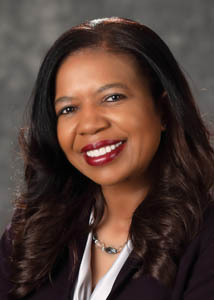 (Washington, D.C.) September 26, 2025 — The Council of Large Public Housing Authorities (CLPHA), a national non-profit that advocates for the resources and policies to preserve and improve public and affordable housing in the United States, announced today the appointment of La Shelle Dozier as Chief Executive Officer. Dozier will be succeeding Executive Director Sunia Zaterman, who is stepping down after more than 30 years of service to CLPHA and the public housing industry. Dozier will be joining the CLPHA team on November 3, 2025, and will begin the transition process throughout the remainder of 2025. This selection was made after a nationwide search led by Sally M. Sterling Executive Search.
|
###
About the Council of Large Public Housing Authorities
|
|
(Washington, D.C.) November 10, 2026 – Following the 2026 midterm elections, in which Democrats secured majorities in both the U.S. House of Representatives and the U.S. Senate, La Shelle Dozier, chief executive officer of the Council of Large Public Housing Authorities, issued the following statement on the path forward for public and affordable housing policy:
“Last week’s election results send an unmistakable message to Capitol Hill: housing affordability is a top priority for American voters. Across the country, low-income families are struggling with rising rents and a severe shortage of affordable homes. True housing affordability requires robust federal investment in rental assistance so that low-income families, seniors, and people with disabilities can keep a roof over their heads.
“The incoming Democratic majorities in both chambers will shift the legislative landscape for public and affordable housing. With new leadership taking the helm of key authorizing and appropriations committees, Congress now has a vital opportunity to secure meaningful funding increases for federal rental assistance programs. For the past several years, public housing authorities have relied on HUD’s inflation-based renewal formulas which have failed to keep pace with real-world market rents and limits communities' ability to serve families in need.
“Now, Lawmakers will return to Washington, D.C. to finish the work of the lame duck Congress, including funding the government for 2027. While the legislative path forward has not yet been determined, CLPHA’s funding priorities will not change, including:
“CLPHA looks forward to working with returning and newly elected members of Congress on both sides of the aisle to protect existing federal housing investments, expand rental assistance, and build the affordable housing supply our communities desperately need.” |
|
### Media Contact: (202) 550-1381 About the Council of Large Public Housing Authorities
|
Applauds Removal of Burdensome MTW Provisions
|
Washington, D.C., May 18, 2026 — La Shelle Dozier, CEO of the Council of Large Public Housing Authorities (CLPHA), released the following statement in support of the revised bipartisan House housing package, the 21st Century ROAD to Housing Act: "CLPHA supports passage of the revised 21st Century ROAD to Housing Act and commends Chair French Hill and Ranking Member Maxine Waters for their bipartisan work to advance meaningful housing legislation. We encourage House leadership to bring the bill to the floor promptly and urge the Senate to act swiftly to send a final package to the President. The amended House bill reflects important improvements that directly benefit the public housing authorities (PHAs) and the low-income families our members serve. Most notably, the removal of the Senate's problematic Moving to Work provisions is a significant win. Those provisions would have imposed burdensome and infeasible reporting requirements on existing MTW agencies and proposed an expansion cohort with limited flexibilities that would have undermined agencies' abilities to respond to local housing needs. Their removal reflects the legitimate concerns CLPHA and our members raised throughout this process. We are also encouraged by the inclusion of meaningful National Environmental Policy Act (NEPA) streamlining reforms, which will reduce regulatory barriers to housing development and preservation, which is a priority for large PHAs working to expand and modernize their housing stock. The urgency of this legislation cannot be overstated. The 10 Year Roadmap for Public Housing Sustainability recently estimated that the baseline cost to preserve the nation's public housing portfolio stands at $169.1 billion, which reflects decades of chronic federal disinvestment and an aging public housing stock that continues to deteriorate. The NEPA reforms and other provisions in this bill that reduce barriers to development and preservation are exactly the kind of solutions our members need to begin making meaningful progress against this crisis. This bill is an important step in the right direction. We recognize that no piece of legislation is perfect. The removal of the provision to eliminate the RAD program cap is a setback, and we hope a conference process will create an opportunity to restore this important provision. We will also continue to closely monitor remaining provisions, including the HUD study on work requirements under Section 803. Even so, this bill represents meaningful bipartisan progress toward addressing the nation's housing affordability and supply crisis. Congress should move quickly to pass this legislation and build on the momentum it creates for the communities and families that need it most." |
|
###
About the Council of Large Public Housing Authorities
Media Contact: Kirsten Greenwell, CLPHA (202) 638-1300 |
(Washington, D.C.) January 29, 2026 – Abra Lyons-Warren, director of Housing Is, released the following statement celebrating today’s new research findings from Opportunity Insights which demonstrate that children who grew up from birth in revitalized public housing units earn about 50% more as adults:
“Housing Is applauds Opportunity Insights for contributing this research that will guide and inform the many sectors that serve low-income individuals, from housing to healthcare, education, and beyond.
“Housing stability is critical for babies and children to get the best start in life, and this groundbreaking research that children who grew up from birth in revitalized public housing units earn about 50% more as adults shows that investing in place-based solutions improves not only their development, but also their life outcomes. When we invest in housing, we invest in people, and that investment pays huge dividends in the adult lives of babies and children from low-income families through increased financial security and economic mobility.
“This research supports what public housing authorities and their partners have long known: that housing stability improves the life outcomes of their youngest and most vulnerable residents. Lawmakers must utilize these learnings to support more cross-sector and place-based solutions, including investments in public housing revitalization, that ensure individuals avoid homelessness in their infancy and childhood and access greater economic opportunities.”
Media Contact:
David Greer, CLPHA
[email protected], (202) 550-1381
###
About the Council of Large Public Housing Authorities
The Council of Large Public Housing Authorities is a national non-profit organization that works to preserve and improve public and affordable housing through advocacy, research, policy analysis and public education. CLPHA’s 85 members represent virtually every major metropolitan area in the country. Together they manage 40 percent of the nation’s public housing program; administer more than a quarter of the Housing Choice Voucher program; and operate a wide array of other housing programs. Learn more at clpha.org.
From Vox:
In the last issue of this newsletter, I wrote about what went wrong with public housing in the United States — how it didn’t necessarily fail, but was routinely sabotaged because of bad policy choices that contributed to neglect and mismanagement. So this week, I want to look at what successful public housing can look like.
Oftentimes, when looking for models to emulate, many Americans look abroad for answers — Austria, Denmark, and Singapore, for example, are frequently cited as places to learn from. But one of the problems with turning to other countries is that their politics and governments are fundamentally different, and simply copying them isn’t always an option.
That’s why I’m particularly interested in looking at examples of public housing models that have worked quite well here in the United States. After all, if one American city or county can pull off an ambitious program, then what’s stopping others from doing the same?
Earlier this year, my colleague Rachel Cohen highlighted a place where local leaders are expanding public housing: Montgomery County, Maryland.
Montgomery County has long prioritized affordable housing. Developers, for example, are required to make at least 15 percent of units in new housing projects available for people who make less than two-thirds of the area’s median income.
But the county got creative with how it could provide public housing: It set aside a fund to finance and develop housing projects. And while the county partners with private developers, its investment makes it a majority owner of a given project. As the New York Times put it, the county, as an owner, becomes “a kind of benevolent investor that trades profits for lower rents.”
For background, the county’s Housing Opportunities Commission (HOC) is not just a public housing authority, but a housing finance agency and public developer as well. “We have these three different components that ultimately work together to help us really advance a very aggressive development strategy that we have deployed over 50 years,” said Chelsea Andrews, executive director of HOC.
Read Vox's article "A public housing success story."
CLPHA Executive Director Sunia Zaterman was quoted in BisNow’s recent article “Biden's Budget Includes 'Once in a Generation' Investment in Vouchers, Public Housing. Now Landlords Need to Get on Board,” offering CLPHA’s perspective on the Biden administration’s American Jobs Plan that would allocate $30 billion the Housing Choice Voucher program and $40 billion to public housing.
“To propose this level of investment in one fell swoop, it’s extraordinary,” Zaterman told BisNow. “There’s now a strong consensus that more could have and should have been done in 2008 and 2009 for reinvestment,” she added. “This $40B [proposal] does not meet the overall need, but it is extraordinary in the level that it raises the funding from our current baseline.”
Read BisNow’s article. (requires free registration for access to the article)
NPR’s Pam Fessler quoted CLPHA Executive Director Sunia Zaterman in a story about the challenges of utilizing the $5 billion in emergency housing vouchers included in the American Rescue Plan. Zaterman told Fessler that while balancing landlord, tenant and taxpayer interests has always been hard, the situation is more dire than ever in the pandemic with millions of Americans struggling with rent. “There is a need for all of our members, a crying need, for additional vouchers that are serving a wide range of populations,” Zaterman said.
Sunia Zaterman participated in a recent story on the unique opportunities presented by the new administration to address the nation’s dire affordable housing shortage as part of Fast Company’s Home Bound, a series that examines Americans’ fraught relationship with their homes.
“Our focus now is assembling the tools to give housing authorities more ability to acquire properties and to bring to neighborhoods other types of affordable housing,” Zaterman told Fast Company of CLPHA’s goals to capitalize on this inflection point in the public and affordable housing industry. She added that while the new HUD administration’s more flexible rules help housing authorities create more affordable housing in their communities, the main need facing PHAs and affordable housing providers is more money: “You may have heard this before—money is the key obstacle.”
This morning, CLPHA Executive Director Sunia Zaterman appeared on C-SPAN's Washington Journal to discuss public and affordable housing issues and President Biden's proposed American Jobs Plan.
Ms. Zaterman answered questions from host Pedro Echevarria and members of the public from around the country, explaining what public housing authorities do, who they serve, and why increasing funding for public housing, vouchers, and other HUD programs is crucial to preserving affordable housing opportunities, strengthening the social safety net, and improving the life outcomes of low income Americans. She also discussed the positive impacts of the American Jobs Plan -- CLPHA estimates that 440,000 jobs will be created and $76 billion in economic impact generated during the time when the $40 billion in funds from the Plan are spent.
On Friday, April 9 from 8:45 to 9:30 a.m. ET, CLPHA Executive Director Sunia Zaterman will appear on C-SPAN's Washington Journal to discuss President Biden's proposed American Jobs Plan, public and affordable housing, and related issues. Read Ms. Zaterman’s statement applauding President Biden’s announcement of the American Jobs Plan here.
You can watch Ms. Zaterman’s interview on the C-SPAN channel or live on C-SPAN's website and ask questions of Ms. Zaterman during the program via phone:
Outside U.S. and Text: (202) 748-8003
Republicans: (202) 748-8001
Democrats: (202) 748-8000
Independents: (202) 748-8002
Viewers can also share their thoughts and questions via email (j[email protected]), Twitter, Facebook and text messages (202-748-8003).
From the Housing Authority of the City of Los Angeles' press release:
he RightWay Foundation and the Housing Authority of the City of Los Angeles (HACLA), joined by Los Angeles Mayor Karen Bass, celebrated the opening of Cincinnati Apartments in Boyle Heights, a new permanent supportive housing community providing 18 fully furnished homes and supportive services for young adults transitioning from foster care who are experiencing or at risk of homelessness.
Young people aging out of foster care are among those most vulnerable to homelessness, often entering adulthood without the family support systems, financial resources, or stable housing that many young adults rely on. Cincinnati Apartments was created to help address those challenges by providing affordable housing and supportive services designed to promote stability, independence, and long-term success.
The development reflects a shared commitment to expanding housing opportunities for Transitional Age Youth and ensuring that young people leaving foster care have access to the housing, support, and community connections needed to successfully transition into adulthood.
"When we house young people as they leave foster care, we stop homelessness before it starts," said Mayor Karen Bass. "This building is a front door and a path forward, with the mental health support, job training, and financial literacy that help a young person thrive. When the City, the State, the County, and community partners stand together, we don't just open doors, we change lives. It's a model we can replicate."
“If we’re serious about ending homelessness, we have to start where it begins. Investing in housing for young people aging out of foster care isn’t charity. It’s prevention,” said Franco Vega, Founder and CEO of The RightWay Foundation.
The project was made possible through a partnership between The RightWay Foundation, HACLA, Genesis LA, Brilliant Corners, and the California Department of Housing and Community Development, which awarded more than $12.5 million in Homekey+ funding to support the acquisition and operation of the property. The investment demonstrates how state resources and local partnerships can work together to create permanent housing solutions for vulnerable populations while helping prevent future homelessness.
As part of its broader commitment to expanding housing opportunities for young people exiting foster care, HACLA continues to pursue federal, state, and local resources that connect Transitional Age Youth to stable housing and supportive services. Most recently, HACLA applied to the U.S. Department of Housing and Urban Development for an additional 150 Foster Youth to Independence (FYI) vouchers, which would help more eligible young adults secure safe, affordable housing as they transition to independence.
HACLA will support the long-term success of Cincinnati Apartments through asset management, operational oversight, and a continued focus on housing quality, resident well-being, and positive outcomes.
"Young people leaving foster care should not have to face homelessness as they begin adulthood," said Lourdes Castro Ramírez, President and CEO of HACLA. "Cincinnati Apartments reflects our commitment to expanding housing opportunities for youth transitioning out of foster care and creating pathways to long-term stability. By combining affordable housing, supportive services, and strong partnerships, we are helping young people build independent and successful futures. We are also pursuing additional resources, including federal housing assistance, to ensure more young adults have access to the housing and support they need to thrive."
"No young person should have to face the world without a place to call home,” said Juan Camacho, Alumni, The RightWay Foundation.
From Affordable Housing Finance's article:
Across the country, families and individuals are struggling to navigate rising housing costs alongside challenges such as food insecurity, chronic illness, limited access to preventive care, and social isolation.
The affordable housing sector has made substantial progress in recognizing these realities. However, housing alone cannot address every challenge residents face. The opportunity now is to build on that foundation by connecting residents with health resources, food access, supportive services, workforce development, and opportunities for community connection.
A stable home is one of the strongest foundations for health and well-being. Research continues to demonstrate that affordable housing can serve as a platform for improved health, stability, and opportunity when paired with resident services, food access, preventive care, workforce development, and opportunities that foster community connection. Studies have linked coordinated resident services to stronger housing stability, improved access to healthcare, and reduced food insecurity, while healthcare organizations are increasingly recognizing the value of housing-focused investments and partnerships.
The question facing many housing and healthcare organizations today is no longer whether housing influences health but how housing and healthcare organizations can work together to maximize that impact.
...
In Columbus, Ohio, Rosewind Estates demonstrates how an affordable housing investment can become the foundation for a broader, sustained community strategy. In 2020, CVS Health invested more than $13 million to help preserve and renovate the 230-home community in collaboration with the Columbus Metropolitan Housing Authority (CMHA). That initial investment led to a continuing collaboration that extends beyond the property renovation.
In 2025, CVS Health and CMHA opened a Workforce Innovation and Talent Center within Rosewind’s community center. The facility offers free, hands-on training for careers such as pharmacy technician, retail, customer service, and call-center positions. A co-located Aetna Community Resource Center connects residents and the surrounding community with health and supportive services.
Rosewind has also become a hub for recurring community programming, including food and holiday-gift distributions and a recent vision clinic offering comprehensive eye exams and prescription glasses at no cost. The lesson is not that every affordable housing development needs the same programs but that sustained collaboration and shared community space can help local partners respond to residents’ needs long after construction is complete.
Addressing the nation’s affordable housing shortage must remain a priority. But as developers, investors, policymakers, and healthcare organizations look to the future, the conversation should go beyond the front door.
When affordable homes are paired with preventive health resources, food access, supportive services, workforce development opportunities, and programs that strengthen community connection, their impact can extend far beyond shelter.
Since 1997, CVS Health has invested more than $2.15 billion in affordable housing nationwide. Over the last five years alone, CVS Health has invested more than $1.1 billion invested across 268 developments, helping create, preserve, or renovate more than 25,000 affordable homes, including housing for families, seniors, and residents with supportive housing needs. Experiences at communities like Grace Manor, West Point Apartments II, and Rosewind, suggest the greatest opportunity lies in pairing housing with the services, resources, and connections that help residents and their surrounding communities thrive.
Affordable housing is the foundation. The next challenge, and opportunity, is building the support systems that turn stability into lasting well-being.
From the Chicago Housing Authority's press release:
The Chicago Housing Authority distributed 5,000 brand-new winter coats to families and children at the agency’s 19th annual Operation Warm event. Nearly 1,600 families living in public housing or participating in the Housing Choice Voucher (HCV) program attended to pick up warm clothing for the upcoming winter and connect with resources to support their families’ well-being.
The event featured remarks from Keith Pettigrew, CEO of CHA and Melissa Conyears-Ervin, Chicago City Treasurer.
“Every child in Chicago deserves to walk into winter feeling warm and confident,” said Keith Prettigrew, CEO of the Chicago Housing Authority. “For 19 years, Operation Warm has shown what’s possible when CHA and our partners come together for our residents. A new coat is the start, but this event is really about making sure families leave with the resources that help them thrive long after the season changes.”
Alongside coat distribution, the event’s service fair brought together 29 organizations offering a variety of resources and services to attendees. A major highlight was the distribution of 15,000 brand-new books through the National Book Foundation’s Book Rich Environment Initiative, as well as free COVID-19 and flu vaccines and boosters, haircuts, cell phones and CityKey cards.
Among the attendees were Melissa Poore, a South Shore CHA resident and mother of three: two sons ages 13 and 1 and a daughter age 11. Melissa says new winter coats will give her peace of mind through Chicago’s harsh winters. She is also looking forward to connecting with resources at the service fair, including LIHEAP energy assistance, employment opportunities, and health and wellness services.
“Operation Warm is about giving families comfort, security, and peace of mind,” said CHA resident Melissa Poore. “As a mother, I’m truly thankful to CHA and everyone involved for showing families like mine that we are supported, valued, and cared for. A simple act of kindness can make a lasting difference.”
From the Austin Housing Authority's press release:
On Sunday, Oct. 18, Austin Housing Authority joined E4 Youth and community partners to celebrate the grand opening and ribbon-cutting of the WOW Heritage Center at Rosewood Courts.
Located at 1141 Chicon Street in Austin’s African American Cultural Heritage District, the WOW Heritage Center is E4 Youth’s first permanent home and creates a dedicated space for storytelling, learning and opportunity rooted in East Austin history.
The Center is part of What Once Was, an E4 Youth initiative that uses immersive media, oral histories, augmented reality, exhibitions and community programming to reconnect stories with the places where they happened.
Learn more about the WOW Heritage Center and What Once Was at whatoncewas.org.
A Place Rooted in Austin History
The WOW Heritage Center stands on ground with deep significance to Austin’s Black community.
In 1905, Black Austinites purchased the land and established Emancipation Park, creating a place where the community could gather and celebrate Juneteenth on land it owned. Decades later, Rosewood Courts opened on the site in 1939 as public housing for African American families.
That history shaped Austin Housing Authority’s message during the grand opening: preserving Rosewood is about more than preserving buildings. It is about ensuring the community’s stories remain connected to the people who lived them.
“Stewardship means keeping the story in the hands of the people it belongs to.”
Helping the Next Generation Tell the Story
The partnership with E4 Youth brings that commitment to life by giving young people an active role in researching, creating and sharing Rosewood’s history.
Rather than simply presenting history on a wall, the WOW Heritage Center gives young people opportunities to research, test and create digital experiences that connect East Austin’s stories to place. Programming at the Center will also allow students to experiment with immersive tools, develop media skills and help shape how the next generation experiences public history.
As Austin Housing Authority shared during the celebration, E4 Youth is helping put “the tools of storytelling in young people’s hands” so the next generation can research the past, create from it and help determine how those stories are carried forward.
The opening also represents an important milestone for E4 Youth. The WOW Heritage Center is the organization’s first permanent home.
Connecting What Once Was to What Comes Next
The opening comes at a pivotal moment for Rosewood Courts.
On Nov. 13, Austin Housing Authority will celebrate the grand opening of Pathways at Rosewood Courts, where redevelopment has expanded the community from 124 to 184 homes while preserving eight historic buildings.
Together, the redevelopment and the WOW Heritage Center connect Rosewood’s future to the history that shaped it.
As Austin Housing Authority shared during the ribbon cutting, what once was is the foundation for what is being built now.
Austin Housing Authority thanks E4 Youth, the Rogers Washington Holy Cross neighborhood, the City of Austin Economic Development Department and the many community members who helped bring the WOW Heritage Center to life.
The community is encouraged to return to the WOW Heritage Center, bring their stories and introduce future generations to the history of Rosewood Courts.
Learn more about the WOW Heritage Center and explore What Once Was at whatoncewas.org.
From the San Diego Housing Commission's press release:
he San Diego Housing Commission (SDHC) announced today that up to $22 million from funds SDHC administers is available for the construction of new affordable rental homes in the City of San Diego for households with lower income.
“The loans we award through this process will help create affordable rental homes for veterans, retirees, young people starting out on their own, families struggling to make ends meet, and our unhoused neighbors,” SDHC President and CEO Lisa Jones said. “These rental homes will provide stability and a greater opportunity for these households to thrive.”
SDHC issues Notices of Funding Availability (NOFA) each year, subject to its annual budget approval, to support the creation of affordable housing. Since 2018, SDHC has awarded more than $131 million to support the production of more than 3,100 newly constructed affordable rental homes in the City of San Diego.
SDHC awards funds to developers as low-interest, residual receipts loans through a competitive process. Developers apply for funds through SDHC’s NOFA. Typically, there is not enough money available to award funds to all the development’s that apply.
Over the years, SDHC’s loans have helped affordable housing developers close funding gaps and aided developers in securing additional funding from other sources by providing an enforceable commitment of public funds. The loans are repaid over time out of the cash flow from the property’s revenue after other approved expenses have been paid. Due to the requirements for rents to remain affordable, a property is not required to make a payment on the loan if it does not generate enough revenue in a given year. This makes affordable housing development possible.
Developers can apply for SDHC’s NOFA through SDHC’s Vendor Portal, PlanetBids, accessible on SDHC’s website at https://sdhc.org/doing-business-with-us/contracting-and-procurement-services/.
SDHC’s NOFAs are separate from, and in addition to, funds the City of San Diego makes available for affordable housing development through the Bridge to Home program, which launched in 2021. The funds available through SDHC’s latest NOFA will consist of federal and local funds SDHC administers:
- HOME Investment Partnerships Program funds that the U.S. Department of Housing and Urban Development (HUD) awards to the City of San Diego
- The City of San Diego Affordable Housing Fund
The rent at housing units created with SDHC’s funds will be required to remain affordable for at least 55 years for households with low income. The $22 million SDHC made available through its latest NOFA will support the creation of homes with rents required to remain affordable for households earning up to 60 percent of San Diego’s Area Median Income (AMI), currently $84,000 per year for a two-person household. Rent generally is considered affordable if it is 30 percent of the pre-tax household income. So, based on current limits, the rent for a household at 60 percent of AMI would be restricted to about $2,100 per month for a two-person household. However, the AMI is updated each year, resulting in adjustments to the maximum allowable rent amount as well.
Additional SDHC Participation in Affordable Housing
In addition to awarding development loans and housing vouchers, SDHC supports the creation and preservation of affordable housing through Multifamily Housing Revenue Bonds; recycled bonds; loan administration; environmental clearance process; administration of land use programs, such as Inclusionary Housing and Density Bonus, in collaboration with the City of San Diego’s Development Services Department; and ongoing compliance monitoring. SDHC also administers the City of San Diego’s Affordable Housing Preservation Fund to help keep exiting housing units affordable. Creating and preserving affordable housing is one of the Strategic Priorities in SDHC’s current Strategic Plan.