PHAs are developing innovative strategies to enable more voucher residents to live in high opportunity neighborhoods with access to resources critical to their long-term success. There is considerable research suggesting that HCV program participants, especially those with young children, achieve better outcomes when they are able to use their voucher in a safe neighborhood with access to quality schools. CLPHA, along with the Poverty and Race and Research Action Council (PRRAC) sponsors the biennial National Housing Mobility Conference, which features presenters from the realms of research, policy, and practice to bring attendees up to date on developments in the field and spark discussions that will push the work forward.
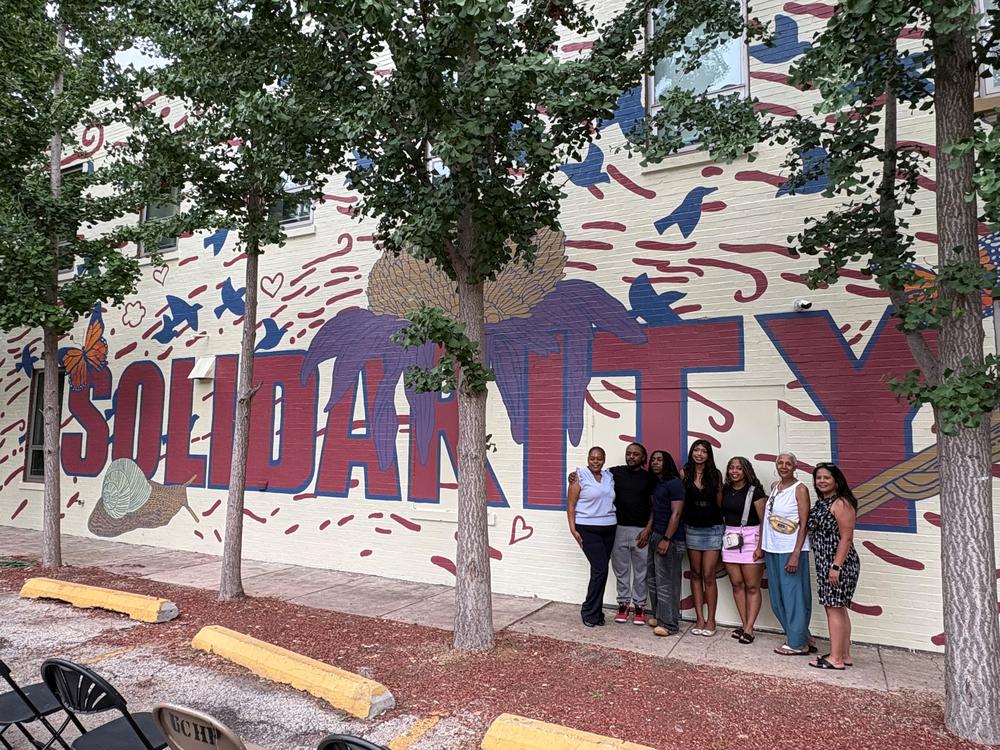
Thanks to sustained advocacy from CLPHA and industry partners, the 21st Century ROAD to Housing Act is headed to the president's desk. The Senate passed the bill Monday with a sweeping bipartisan vote of 85-5, and the House followed last night with an equally strong 358-32 vote. This landmark legislation restores critical Rental Assistance Demonstration (RAD) and Build America, Buy America (BABA) wins that had been stripped from earlier versions of the bill and takes meaningful steps to address the nation's housing affordability and supply crisis. President Trump is expected to sign the bill later this week.
The bill delivers several of CLPHA’s 2026 Policy Priorities and includes provisions that would significantly impact CLPHA members, all PHAs, and the residents they serve. The bill:
- Increases the RAD program unit cap from 455,000 to 555,000 units.
- Modernizes the HOME Program to expand eligibility by updating program limits and allowing participating jurisdictions greater flexibility to use HOME funds for housing-related infrastructure, including a HUD review of BABA requirements for HOME program-related activities.
- Establishes an opt-out pilot program for the Family Self-Sufficiency Program to support up to five thousand additional households.
- Raises the public welfare investment cap from 15 to 20 percent.
- Amends the federal definition of “manufactured home” to allow housing built with or without a permanent chassis.
CLPHA remains concerned about the MTW provisions in the bill, particularly the burdensome reporting requirements for all MTW public housing authorities, and a new “Economic and Pathways to Independence Cohort” that would limit certain key rent policy flexibilities and undermine agencies’ abilities to respond to local housing needs.
Despite these concerns, this bill represents meaningful bipartisan progress toward addressing the nation's housing affordability and supply crisis. CLPHA thanks the sponsors of this landmark legislation and looks forward to working with HUD on the implementation of the 21st Century ROAD to Housing Act.
From the DC Housing Authority's press release:
Today, the Deputy Mayor’s Office for Planning and Economic Development (DMPED), the District of Columbia Housing Authority (DCHA), nonprofit developer Preservation of Affordable Housing (POAH) and Barry Farm community members celebrated the groundbreaking of the 90-unit, fully affordable Hillsdale Flats Phase I, the third new construction property in the multi-phase redevelopment of the Barry Farm-Hillsdale community in DC’s historic Anacostia neighborhood.
“This first phase of Hillsdale Flats marks a powerful step forward in one of the District’s most transformative redevelopment efforts,” said Deputy Mayor for Planning and Economic Development Nina Albert. “These 90 affordable homes build on more than $1 billion invested in Ward 8 under the Bowser Administration and reflect our commitment to creating opportunity, strengthening neighborhoods, and honoring this community’s legacy.”
Part of the New Communities Initiative (NCI) at Barry Farm, Hillsdale Flats Phase I will consist of 9 three-story, stacked-flat buildings constructed in a nearly 1.35 acre parcel between Sumner Road SE, Wade Road SE, Eaton Road SE and Firth Sterling Ave SE. It will offer 7 one-bedroom, 31 two-bedroom, 33 three-bedroom, 15 four-bedroom and 4 five-bedroom units.
Five of the 90 units are accessible for families with mobility impairments while two others are accessible for families with sensory impairments. Of the 31 two-bedroom apartments, nine will be live-work units where artists and entrepreneurs can take advantage of a hybrid studio space within the home. The apartment community’s 90 units are dedicated to residents earning up to 80 percent of the Area Median Income (AMI), with 42 designated for former Barry Farm Dwellings residents.
“With this groundbreaking, we are fulfilling our promise to deliver safe and quality affordable housing that our Barry Farm families asked for and deserve,” said DCHA Interim Executive Director Nicole Wickliffe. “Hillsdale Flats Phase I was designed with the intention of supporting parents and children as they grow and thrive. These family-sized units will turn this idea into reality. Thank you to Mayor Bowser, DMPED, the DC Housing Finance Agency, the Department of Housing and Community Development, and POAH for your dedication to our shared vision of community-centered neighborhoods with high-quality, affordable housing for all residents. Most importantly, thank you to our DCHA families for your partnership as we create quality affordable housing while honoring Barry Farm’s rich history.”
“POAH is excited to collaborate with so many committed partners to construct the third new property and continue our work to create a vibrant, mixed-income community at Barry Farm, as well as provide greater economic opportunities for neighborhood residents,” said Aaron Gornstein, President and CEO of POAH. “We are grateful to the former Barry Farm residents, Mayor Bowser, the District of Columbia Housing Authority, DMPED, DC Housing Finance Agency, and all our financial partners for their unwavering support and patience.”
The District of Columbia Housing Finance Agency (DCHFA) underwrote short and long-term tax-exempt bonds and federal and DC Low Income Housing Tax Credit (LIHTC) equity to fund construction of Hillsdale Flats Phase I. The project is also supported by DMPED, which provided NCI loans for predevelopment, infrastructure loans and construction gap financing. Other construction financing partners include JPMorgan Chase and Fannie Mae, National Equity Fund Inc. as the equity investor, and the District’s Department of Housing and Community Development.
“DCHFA is proud to support the continued transformation of Barry Farm through developments like Hillsdale Flats Phase I, which expand access to beautiful, healthy and high-quality affordable housing for District residents. This project reflects our commitment to preserving affordability while creating opportunities for families to thrive in vibrant, well-resourced communities. We are especially encouraged by the focus on inclusive design, multigenerational living, and pathways for returning residents, all of which honor the history of Barry Farm while preparing it for a strong and sustainable future,” said Christopher E. Donald, Executive Director/CEO, DCHFA.
DCHA and POAH serve as co-developers for the Barry Farm site, where the multi-phase redevelopment has already delivered The Asberry, a 108-unit, fully affordable, mixed-use property with a preference for elderly families. The first new construction project on the site, The Asberry opened in November 2024 and is fully leased. Construction began in 2024 on the 139-unit, fully affordable Edmonson, which is expected to be completed by the end of 2026.
Since commencing the Barry Farm redevelopment project, a total of 2,068 construction jobs were created and more than five dozen certified business enterprises (CBEs) delivered design, construction and other services.
Once complete, the project will create a vibrant, mixed-income community of at least 900 residential units, including at least 380 on-site replacement units for former Barry Farm residents; community-serving retail spaces; and central greenspace with community facilities for on-site services and programs. It will also feature five residential buildings designated as a historic landmark in honor of the community’s rich heritage.
Barry Farm-Hillsdale was established in 1867 as the first homeownership community in Washington, D.C. with land designated for newly freed enslaved African Americans. The community thrived and established a firm foundation of community organizations and leaders. This legacy continued through the Barry Farm Dwellings, a public housing community constructed in the 1940s whose residents continued to be trailblazers and advocates for racial and economic justice nationally, in D.C. and in their own community.
The multi-phase redevelopment of Barry Farm is one of four former public housing communities being revitalized through the New Communities Initiative (NCI), a District government program that creates vibrant mixed-income neighborhoods through a partnership between DMPED and DCHA.
Other NCI projects include the Rise at Temple Courts at Northwest One, which officially opened in Ward 6 in late 2022; Lincoln Heights – Richardson Dwellings in Ward 7, where hundreds of replacement units have been delivered; and Park Morton, where the first phase, the 142-unit Park Morton Apartments, opened in 2025.
From NYU Furman Center:
Public housing in the United States has been slowly decaying for decades. After years of substandard construction and inadequate funding for maintenance, many developments desperately need safer wiring, working elevators, better heating systems, new roofs, and other basic repairs. In 2012, Congress created the Rental Assistance Demonstration program (also known as RAD) as one response to that problem. The program allows housing authorities to convert developments from traditional public housing funding to project-based Section 8 contracts, making it easier to borrow money and bring in other funds for major repairs and rehabilitation. By 2024, nearly 230,000 public housing units—almost one-fifth of all public housing—had gone through RAD conversion.
From the beginning, RAD has raised a variety of concerns. Tenants and advocates have worried that a program meant to preserve public housing might end up making it less secure for the people living there. If conversion brings in new private managers, would those managers be quicker to turn to the courts when tenants fall behind on rent? Would redevelopment create pressure to push residents out? Would RAD—like the HOPE VI program before it—become another housing policy that promised improvement while exposing tenants to new risks?
In the first systematic national study of RAD-related displacement published in Housing Policy Debate, we address one important aspect of this debate: Does RAD conversion lead to more formal evictions? Looking at more than 4,000 public housing developments nationwide and more than half a million eviction records, we find no evidence that this is happening. On average, RAD conversion was not associated with an increase in eviction filings or eviction judgments. That was true in New York State, where we have especially detailed and long-running data, and it was equally true in the rest of our sample as well.
In theory, public housing offers the sort of stability that is often difficult for low-income households to access in the midst of a historic affordability crisis. Tenants pay rents adjusted to their income, and they have stronger protections than most renters in the private market. If agencies or outside managers were going to become more aggressive after conversion, eviction court is one place where we would expect to see it. Earlier research has shown that public housing agencies file eviction cases at high rates and often use the threat of eviction as a rent collection tool. This means that RAD conversion could actually have an opposite effect, reducing eviction rates from these developments.
To study the issue, we assembled records for 617,900 eviction cases filed between 2010 and 2024 against residents of 4,410 public housing developments across 43 states and the District of Columbia. During the study period, 812 of those developments (18%) went through RAD conversion. These data let us compare eviction patterns before and after conversion, while also comparing converted developments to public housing properties that either never converted or had not yet converted. Because we had access to more data from New York State—and because the state is home to the New York City Housing Authority (NYCHA), the nation’s largest housing authority—we analyzed New York separately from the rest of the sample.
We focused on two measures. The first was the eviction filing rate, which tells us how often landlords bring tenants to court. The second was the eviction judgment rate, which tells us how often those cases end with a judge ruling against the tenant. Judgments matter because they reflect a later and more serious stage of the process. We also looked at two different points in the RAD timeline: the point when HUD approved the deal and the point down the line when the conversion officially closed. That let us test whether eviction patterns changed in the run-up to conversion, not just after it was finalized.
The results are consistent: We found no evidence that converting public housing buildings to Section 8-based developments increased eviction rates. In the years leading up to conversion, developments that later converted did not appear to be on a different path from those that had not yet converted. And in the years after conversion, eviction filing rates did not rise or fall in a clear or statistically meaningful way. When we repeated the analysis using the earlier approval date instead of the closing date, the results looked much the same.
Many CLPHA member PHAs participate in special purpose voucher programs, such as the Family Unification Program (FUP), the Department of Housing and Urban Development and Veterans Affairs Supportive Housing Program (HUD-VASH), and the Non-Elderly Disabled (NED) program. These programs serve especially vulnerable low-income households who are in need of supportive services to ensure long-term housing stability. CLPHA members have created a variety of innovations to more effectively serve program participants.