The Trump Administration released the remainder of its fiscal year 2020 (FY18) budget on March 18. As noted last week, the proposal would completely eliminate all funding in FY20 for the Public Housing Capital Fund and slash funding for the Public Housing Operating Fund by almost $2 billion, a combined loss of $4.6 billion. The proposal additionally eliminates the Choice Neighborhoods Initiative, HOME, CDBG, and other programs, while adding $100 million for the Rental Assistance Demonstration (RAD) program and eliminating the cap on RAD conversions.
We will shortly provide a more detailed analysis for CLPHA members—including major program and policy revisions, along with HUD’s justifications to Congress on the FY20 budget proposal.
Below is a quick review of proposed funding levels for some programs of interest, and links to CLPHA's comparative funding chart and the joint industry funding recommendations from CLPHA, NAHRO, and PHADA.
Public Housing Operating Fund - HUD proposes $2.863 billion in FY20. This is $1.79 billion less than the $4.653 billion enacted in FY19, and $2.537 billion less than the CLPHA request of $5.4 billion.
Public Housing Capital Fund - HUD proposes no funding in FY20. This is $2.775 billion less than the amount enacted in FY19, and $5.0 billion less than the CLPHA request. HUD proposes to transfer the set-aside funding accounts from the Capital Fund to the Operating Fund. The accounts transferred to the Operating Fund include a $15 million set-aside for the Jobs Plus Initiative, equal to the FY19 enacted level; and $10 million set-aside for emergency capital needs, $20 million less than the FY19 enacted level. HUD proposes no funds for Resident Opportunity and Supportive Services (ROSS) in FY20.
Housing Choice Voucher Renewals - HUD proposes $20.116 billion in FY20. This is $197 million less than the $20.313 billion enacted in FY19, and $1.084 billion less than the CLPHA request of $21.2 billion.
Housing Choice Voucher (HCV) Administrative Fees - HUD proposes $1.738 billion in FY20. This is $148 million less than the $1.886 billion enacted in FY19, and $762 million less than the CLPHA request of $2.5 billion.
Tenant Protection Vouchers - HUD proposes $130 million in FY20. This is $45 million more than the $85 million enacted in FY19, and equal to the CLPHA request.
VASH Vouchers - HUD proposes no new funding in FY20. This is $40 million less than the amount enacted in FY19, and $75 million less than the CLPHA request of $75 million.
Rental Assistance Demonstration - HUD proposes $100 million in FY20. This is $100 million more than the enacted amount in FY19, and equal to the CLPHA request.
Choice Neighborhoods Initiative - HUD proposes no funding in FY20. This is $150 million less than the amount enacted in FY19, and $300 million less than the CLPHA request.
Family Self Sufficiency - HUD proposes $75 million for the Family Self-Sufficiency Program in FY20. This is $5 million less than the enacted amount in FY19, and $35 million less than the CLPHA request of $110 million.
See attached comparative funding chart and joint industry funding recommendations.
Contact CLPHA's Legislative Director Gerard Holder at [email protected] with questions.
The Trump Administration released its fiscal year 2020 (FY20) budget proposal today, with more specific numbers expected early next week. The current version includes a request for $44.1 billion in discretionary funding to the Department of Housing and Urban Development (HUD), an $8.7 billion or 16.4 percent decrease from current funding levels.
The proposal would completely eliminate all funding in FY20 for the Public Housing Capital Fund and slash funding for the Public Housing Operating Fund by almost $2 billion, a combined loss of $4.6 billion. The proposal additionally eliminates the Choice Neighborhoods Initiative, HOME, CDBG, and other programs, while adding $100 million for the Rental Assistance Demonstration (RAD) program and eliminating the cap on RAD conversions.
The proposal is seen as a non-starter on Capitol Hill, where Speaker of the House Nancy Pelosi said today that the majority party will, “reject this toxic, destructive budget request which would hollow out our national strength and fail to meet the needs of the American people.”
CLPHA will provide a more robust analysis of the numbers once the complete budget request is released.
DHA CEO Anthony Scott Testifies Before House Appropriations Subcommittee on Behalf of the Council of Large Public Housing Authorities: Aggressive Action is Needed to Undertake Affordable Housing Production and Preservation

WASHINGTON (March 7, 2019) – This morning, Durham Housing Authority CEO Anthony Scott testified on behalf of the Council of Large Public Housing Authorities before the House Appropriations Subcommittee on Transportation, Housing and Urban Development, and Related Agencies during its hearing, “Stakeholder Perspectives: Affordable Housing Production.” Scott emphasized the critical need for reinvestment in the nation’s Public Housing and Section 8 Housing Choice Voucher programs, which are the foundation of the affordable housing market.
“As a nation, we are now at a critical stage for needing aggressive action to undertake affordable housing production and preservation,” testified Scott.
In addition to calling for increased appropriations to the public housing capital and operating funds, Scott urged Congress to combat the affordable housing shortage by providing housing authorities greater flexibility to preserve and transform public housing through the Rental Assistance Demonstration Program, the Moving to Work program, and with selected and targeted flexibilities through a defined statutory process.
“Fundamentally, the RAD program allows DHA to create mixed-use and mixed-income communities that allow a more diverse socio-economic living environment,” testified Scott. “Our barriers are a RAD program that doesn’t allow enough flexibility to fully leverage development opportunities with private sector development… The private market moves at a faster pace and waiting on a RAD approval to transfer units could result in a missed opportunity.”
Scott also recommended Congress eliminate the Faircloth Amendment, which prohibits the development of new public housing units; invest in broad place-based solutions such as the Choice Neighborhoods Initiative to address neighborhood and community development needs; encourage greater interdepartmental collaboration to facilitate cross-sector partnerships with housing; and distinguish public and affordable housing as an integral part of the national infrastructure.
“We thank Chairman Price for inviting CLPHA and Mr. Scott to participate in today’s hearing, and for recognizing that public housing authorities are essential to local housing markets as the owners and operators of most of the assisted housing that serves extremely low-income households while generating wide reaching economic impacts,” said CLPHA Executive Director Sunia Zaterman. “We look forward to working with the committee to increase support for public and affordable housing programs that provide decent housing to the nation’s most vulnerable citizens, connect low-income workers to economic opportunities, and spur regional job creation and economic growth.”
Along with Scott, representatives from the North Carolina Housing Finance Agency and National Housing Trust were invited to participate in the Appropriations Subcommittee hearing.
The testimony is posted to the Committee website and the live-stream recording of the hearing can be viewed on the Committee's YouTube channel.
About the Council of Large Public Housing Authorities
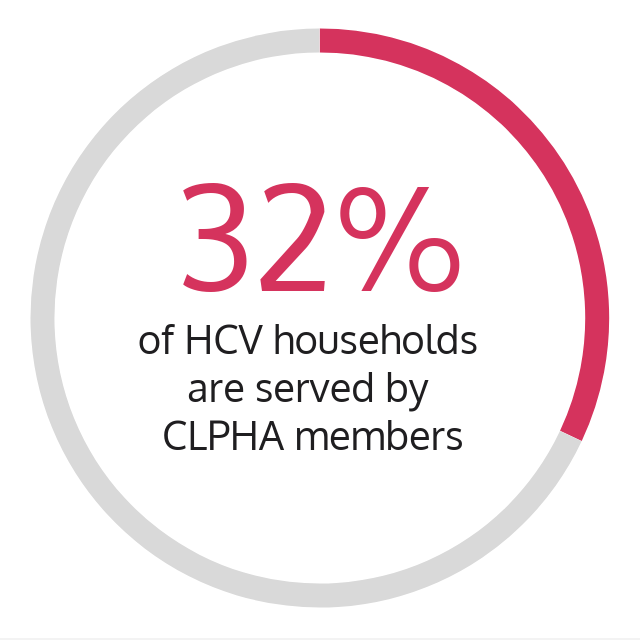
The Council of Large Public Housing Authorities is a national non-profit organization that works to preserve and improve public and affordable housing through advocacy, research, policy analysis and public education. CLPHA’s 70 members represent virtually every major metropolitan area in the country. Together they manage 40 percent of the nation’s public housing program; administer more than a quarter of the Housing Choice Voucher program; and operate a wide array of other housing programs. Learn more at clpha.org and on Twitter @CLPHA and follow @housing_is for news on CLPHA’s work to better insect the housing field and other areas of critical importance such as health and education.
###